How to Choose the Best Dash Cam With Night Vision for Pickup Trucks
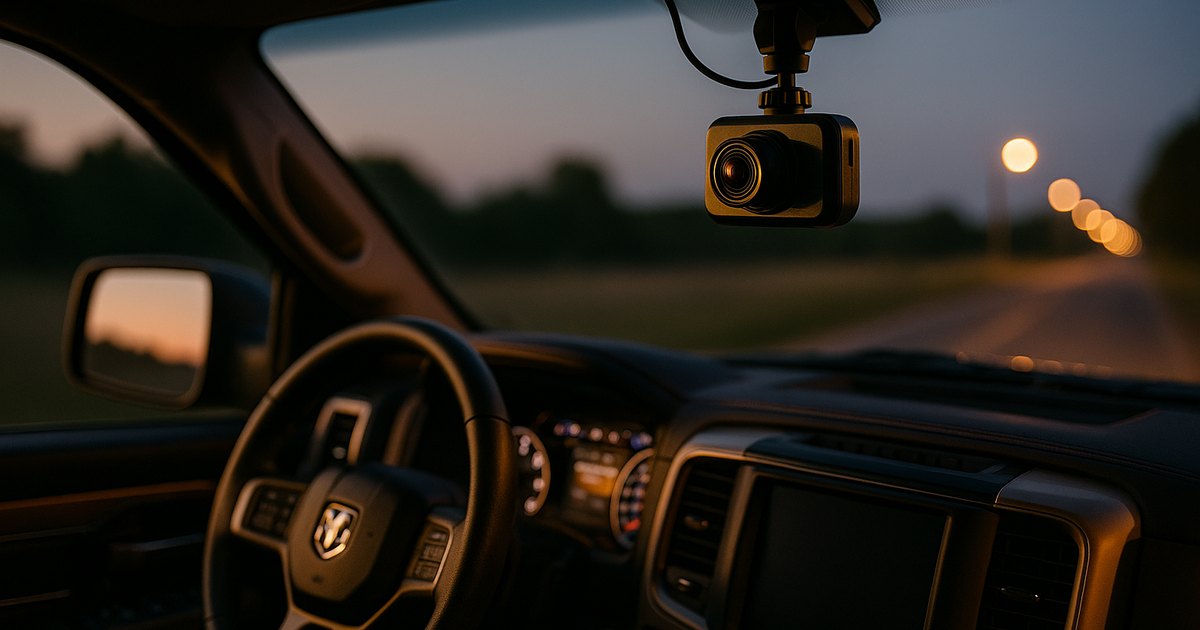
Quick answer
The best dash cam with night vision for pickup trucks combines a low-light capable image sensor, a wide field of view that accounts for a truck's higher ride height and longer hood, reliable loop recording, and a mounting kit suited to larger windshields. No single spec guarantees clear nighttime footage, so match the camera's stated sensor type and lux rating to your typical driving conditions.
- Low-light image sensor rated for nighttime or low-lux performance
- Wide dynamic range (WDR) to balance headlights against dark backgrounds
- Mounting position compatible with tall windshields and raised dashboards
- Parking mode or motion detection for overnight truck bed and perimeter monitoring
- Durable temperature rating for cabins exposed to heat or cold extremes
- Sufficient storage and loop recording to avoid missed footage
Key takeaways
- A higher-resolution sensor does not automatically mean better night footage; the sensor's low-light rating and lens aperture matter more than resolution alone.
- Pickup trucks often need a slightly different mounting angle than sedans because of hood length, hood scoops, and raised seating position.
- Dual-channel systems add a second lens for the cab interior or truck bed, which is useful for cargo and tailgate monitoring.
- Parking mode relies on either a hardwire kit or a dedicated battery pack, and truck electrical systems may need a compatible fuse tap.
- Manufacturer night vision claims vary widely in testing conditions, so treat marketing language as a starting point, not a guarantee.
- Storage cards wear out faster in cameras with continuous loop recording, so check the manufacturer's recommended card specification before buying.
Who this guide is for
This guide is written for pickup truck owners who drive regularly after dark, including rural commuters, work-truck operators, and anyone hauling trailers or cargo overnight. It is also useful for drivers who want documentation in case of an accident, vandalism, or theft while the truck is parked.
If you only drive during daylight hours or primarily use your truck for short, well-lit urban trips, a basic dash cam without an emphasis on night vision may be sufficient, and this guide will still help you understand the trade-offs. Fleet managers evaluating multi-vehicle camera systems may also want to consult a dedicated fleet telematics resource, since this guide focuses on consumer-grade dash cams for personal pickup trucks.
Readers who need a cam primarily for daytime dash cam coverage, or who are comparing cameras across vehicle types rather than specifically for trucks, may find a general dash cam buying guide more directly useful than this truck-focused resource.
Buying criteria
Low-light sensor quality
The image sensor converts light into the video you see, and its low-light performance determines how usable nighttime footage actually is. Manufacturers sometimes list a lux rating or reference a specific sensor type to indicate low-light capability. Because pickup trucks are often driven on unlit rural roads or highways, a sensor explicitly marketed for low-light or night conditions is worth prioritizing over one optimized only for daytime resolution.
Field of view and mounting fit
Field of view describes how wide an angle the camera captures, measured in degrees. Pickup trucks have taller windshields and longer hoods than sedans, so a camera's mounting bracket and viewing angle need to clear the hood line and avoid capturing excessive dashboard glare. Look for adjustable mounts or wide field-of-view options so the recorded image isn't dominated by the hood or obstructed by a raised dashboard.
Dynamic range handling
Wide dynamic range, often shortened to WDR or HDR in listings, refers to how well a camera balances very bright areas, such as oncoming headlights, against very dark surroundings in the same frame. Without this feature, nighttime footage can show blown-out highlights or details lost in shadow, which can obscure license plates or road hazards.
Storage, loop recording, and card compatibility
Dash cams record continuously and overwrite older footage once storage fills up, a process called loop recording. Check the maximum supported storage card size and the manufacturer's recommended card type, since continuous writing can wear out lower-endurance cards faster than expected. Larger storage extends how far back you can retrieve footage before it's overwritten.
Power source and parking mode
Most dash cams draw power from a 12V outlet, but parking mode monitoring while the truck is off typically requires either a hardwire kit connected to the fuse box or a separate battery pack. Confirm the camera's parking mode voltage cutoff settings are adjustable, since trucks with larger batteries and different electrical loads may need different protection thresholds to avoid battery drain.
Build quality and temperature tolerance
Truck cabins and windshields can reach high interior temperatures in direct sun and low temperatures in cold climates, especially for trucks used for towing or work in varied regions. Review the manufacturer's stated operating temperature range, since cameras not rated for temperature extremes may experience reduced performance or shortened lifespan in harsh conditions.
Feature explanations
Infrared (IR) assist vs. low-light sensors
Some dash cams use infrared LEDs to illuminate the cabin for interior-facing lenses, which is common on dual-channel or rideshare-oriented models. This differs from a low-light exterior sensor, which relies on sensor sensitivity rather than illumination to capture a clearer road-facing image after dark. Listings should specify which approach applies to which lens.
Dual-channel and multi-camera setups
A dual-channel dash cam includes a second camera, often positioned to face the cabin, the rear window, or the truck bed. For truck owners who haul cargo or tow trailers, a rear- or bed-facing second lens can help document cargo security or trailer connections, separate from the forward night-vision lens.
G-sensor and automatic event locking
A G-sensor detects sudden changes in motion, such as hard braking or impact, and automatically locks the relevant video clip so it isn't overwritten by loop recording. This is particularly relevant for documenting incidents that occur while towing or driving on uneven terrain common to truck use.
GPS logging
Some dash cams include built-in GPS to timestamp location and speed data alongside video. This can be useful for insurance documentation but adds a feature set that should be confirmed against the specific listing, since not all night-vision-focused models include it.
App and connectivity options
Many dash cams pair with a smartphone app over Wi-Fi for reviewing footage without removing the storage card. Confirm the app's stated compatibility with your phone's operating system on the product listing before purchase, since compatibility details can change between model revisions.
Decision table
| Driving scenario | Feature to prioritize | Why it matters |
|---|---|---|
| Unlit rural roads or highways at night | Sensor with a stated low-lux or night-specific rating | Standard sensors may underexpose dark roadways, missing key details |
| Frequent oncoming headlight glare | Wide dynamic range (WDR/HDR) | Balances bright headlights against dark backgrounds in the same frame |
| Hauling cargo or towing trailers | Dual-channel system with rear or bed-facing lens | Documents cargo and trailer connections separately from the road view |
| Overnight parking in public or shared lots | Parking mode with adjustable voltage cutoff | Monitors the vehicle while off without excessively draining the battery |
| Extreme climate regions (very hot or cold) | Stated wide operating temperature range | Reduces risk of reduced performance in cabin temperature extremes |
| Frequent footage review on a phone | Wi-Fi app connectivity with confirmed OS compatibility | Simplifies retrieving and sharing clips without removing the storage card |
How to choose
- Identify your primary driving conditions, such as rural highways, towing routes, or urban night driving, so you can prioritize sensor quality or dynamic range accordingly. This prevents paying for features you won't use and missing ones you need.
- Measure your windshield's mounting area and check dashboard clearance before buying, since taller truck windshields and raised dashboards can affect camera placement. This avoids a mount that obstructs your view or captures too much hood.
- Decide whether you need a second lens for cargo, trailer, or cabin monitoring, since adding a dual-channel system later may require rewiring. This avoids buying a single-channel unit you'll need to replace.
- Check the manufacturer's recommended storage card type and maximum capacity, then purchase a compatible card separately if one isn't included. This reduces the risk of recording failures from using an unsupported card.
- Confirm whether parking mode requires a hardwire kit or battery pack, and check that kit's compatibility with your truck's fuse box layout. This prevents installation delays or battery drain issues after purchase.
- Review the camera's stated operating temperature range against your regional climate, especially if the truck is parked outdoors year-round. This reduces the risk of reduced reliability in temperature extremes.
- Read the product listing's app compatibility and firmware update details before buying, since features can change between model revisions. This avoids discovering compatibility gaps after installation.
Common buying mistakes
- Assuming higher resolution means better night footage. Resolution affects daytime detail, but low-light performance depends more on sensor sensitivity and aperture; verify both specs rather than resolution alone.
- Ignoring mounting compatibility with truck windshields. A camera designed for compact cars may sit awkwardly on a raised truck dashboard; check adjustable mount options before purchase.
- Skipping the storage card compatibility check. Using an unsupported or low-endurance card can cause recording failures; confirm the manufacturer's recommended card specification first.
- Overlooking parking mode power requirements. Parking mode without a proper hardwire kit or battery pack can drain your truck's battery; confirm installation requirements in advance.
- Buying based on marketing claims alone. Terms like "super night vision" are not standardized; compare stated lux ratings and sensor details across listings instead.
- Forgetting state windshield-mounting regulations. Some states restrict where cameras can be mounted on a windshield; check local rules before installation.
- Not planning for dual-channel needs upfront. Adding a rear or bed-facing camera later may require different wiring than a single-channel setup allows.
- Neglecting firmware and app update support. A camera with discontinued app support can lose functionality over time; check how actively the manufacturer lists update availability.
Limitations and checks
No hands-on testing was performed for this guide. The article is based on published product information, available specifications, retailer descriptions, and practical buying criteria.
Night vision performance, lux ratings, field-of-view angles, and operating temperature ranges can vary between model revisions, so always verify current specifications on the manufacturer's or retailer's official product page before purchase. This article cannot confirm real-world video quality, since no independent testing was conducted for this guide, and marketing descriptions of "night vision" are not governed by a single industry standard.
Windshield-mounting regulations, dash cam legality for footage use in insurance claims, and data privacy rules for recording passengers vary by state, so confirm local requirements separately. App compatibility, storage card recommendations, and included mounting hardware may also change between product revisions, so cross-check the listing at the time of purchase rather than relying solely on this guide.
Where to buy
Dash cams with night vision features marketed for trucks are typically available through manufacturer websites, general online marketplaces, and automotive electronics retailers. Each channel may differ in listed specifications, included accessories, and return policies, so compare the same model's listing details across sources before purchase. Review each retailer's shipping, warranty, and return terms directly on their site, since these details can change independently of the product specifications discussed in this guide. For context on how this site may be compensated when you use outbound retailer links, see our affiliate disclosure.
Also on Amazon
Handy extras our readers pick up on Amazon. Compare reviews and delivery times before you buy.
Dash CamFront camera with loop recording and night vision.Check price on Amazon
Magnetic Phone MountSteady phone mount for dash or vent.Check price on Amazon
Fast Car ChargerUSB-C PD charger for phones and tablets.Check price on Amazon
Portable Jump StarterStart a dead battery without another car.Check price on Amazon
Search Amazon for more options and compare reviews and delivery times.
As an Amazon Associate I earn from qualifying purchases.
Bottom line
There is no universal best dash cam with night vision for pickup trucks, since the right choice depends on your driving conditions, towing habits, and climate. For rural night driving, prioritize a sensor with a stated low-light rating and wide dynamic range. For hauling or towing, a dual-channel setup with a rear or bed-facing lens adds practical monitoring. Before buying, confirm mounting fit for your truck's windshield, storage card compatibility, and parking mode power requirements directly on the product listing, then compare those specifics across retailers listed in this guide.
Frequently asked questions
Do pickup trucks need a different dash cam than cars?
Not necessarily a different camera model, but mounting position and field of view matter more due to taller windshields and longer hoods. Confirm the mount can be adjusted to avoid excessive hood coverage in the frame, and check that the field of view suits your cab's dashboard height before buying.
What lux rating is good for night driving?
There is no single standardized lux threshold that applies across all manufacturers, since testing conditions vary. Compare the lux rating or low-light claims listed for each camera against similar models, and treat the figure as a relative indicator rather than a guaranteed performance outcome in all lighting conditions.
Is parking mode necessary for a truck dash cam?
Parking mode is optional but useful if your truck is parked outdoors overnight or in shared lots, since it can record motion or impact events while the engine is off. It typically requires a hardwire kit or separate battery pack, so confirm installation requirements before assuming it works out of the box.
Can I add a second camera for my truck bed?
Yes, some dash cams support a dual-channel setup where a second lens can be positioned to face the rear window or truck bed. Confirm the cable length and mounting compatibility for your truck's cab length before purchase, since bed-facing placement may require additional wiring accessories.
Does a higher-resolution camera always perform better at night?
No, resolution primarily affects daytime detail and playback clarity, not low-light sensitivity. A camera's sensor type, aperture, and stated low-light or lux rating have more influence on night performance than resolution alone, so compare those specifications directly.
What storage card should I use for continuous recording?
Use the storage card type and capacity specifically recommended by the camera's manufacturer, since continuous loop recording writes data constantly and can wear out lower-endurance cards faster. Check the product listing for the maximum supported card size before purchasing one separately.
Are windshield-mounted dash cams legal in every state?
Mounting rules vary by state, with some restricting where on the windshield a device can be placed. Check your state's specific windshield obstruction laws before installation, since this guide cannot confirm regulations for every location.
How do I know if a dash cam will fit my truck's electrical system?
Check whether the dash cam's hardwire kit is compatible with your truck's fuse box layout, which can differ by make and model. If you're unsure, consult the kit's installation instructions or a qualified installer before wiring it directly into the truck's electrical system.
Sources and further reading
Independent references for checking the safety, rules and buying details covered in this guide. We are not affiliated with these organizations.